Moving from ISO 55000 Compliance to Real Asset Management Capability
Discover how infrastructure organisations can move beyond ISO 55000 compliance and build practical asset management capability that improves everyday decisions.
Introduction
A policy exists. Roles have been assigned. Procedures have been documented. The asset management plan has been approved.
So, are we good at asset management?
Not necessarily.
Standards provide valuable structure, but documents alone don't maintain a road, extend the life of a pump or tell a leadership team which ageing asset deserves funding first.
The real test comes when decisions have to be made.
Can people find the information they need? Do technical and financial teams work from the same priorities? Are risks understood before assets fail? Does the maintenance programme reflect what matters most? And when circumstances change, can the organisation respond?
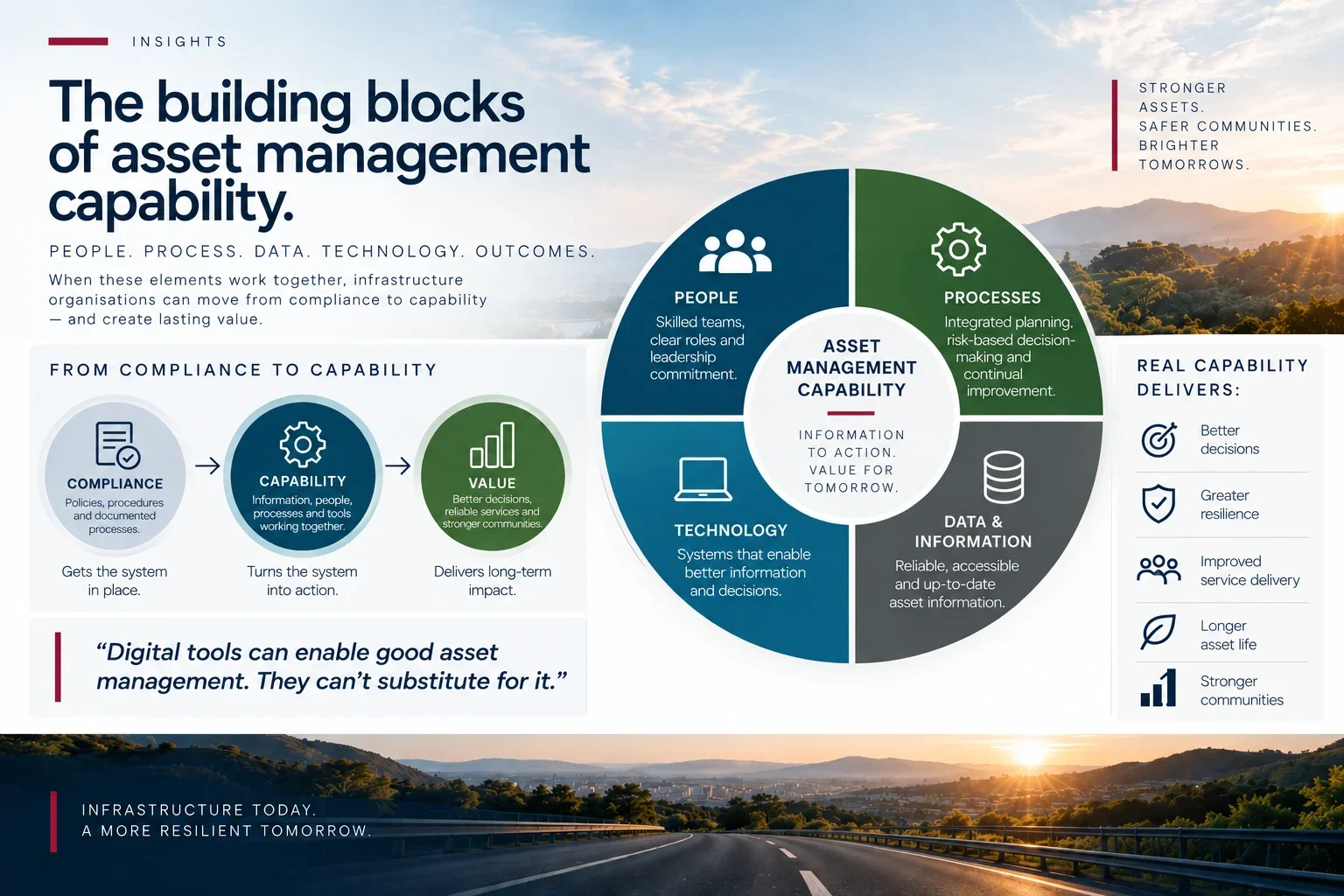
That's where the conversation moves from compliance to capability.
ISO 55000 asset management principles provide a strong foundation for managing assets systematically and realising value from them over their lifecycle. ISO 55001 goes further by setting requirements for an asset management system. But the objective shouldn't simply be to build a system that looks convincing on paper.
It should work.
Compliance Can Build the Framework. Capability Makes It Useful.
There is nothing wrong with compliance.
Clear policies, responsibilities, objectives, processes and governance structures matter. They establish consistency and accountability.
The problem begins when completing the framework becomes the destination rather than the starting point.
An organisation can have sophisticated asset-management documentation while teams still rely on disconnected spreadsheets. It can have clearly defined processes while maintenance remains largely reactive. It can collect enormous amounts of asset data without consistently using that information to prioritise investment.
In other words:
Having an asset management system and having asset management capability aren't quite the same thing.
Capability shows up in what an organisation can actually do.
What Does Real Asset Management Capability Look Like?
You can often recognise it without opening a manual.
It appears when an organisation can:
- Connect asset decisions to organisational objectives and service outcomes.
- Understand what assets it has and maintain sufficiently reliable information about them.
- Assess condition, criticality and risk consistently.
- Plan maintenance before every problem becomes an emergency.
- Consider lifecycle implications when making capital decisions.
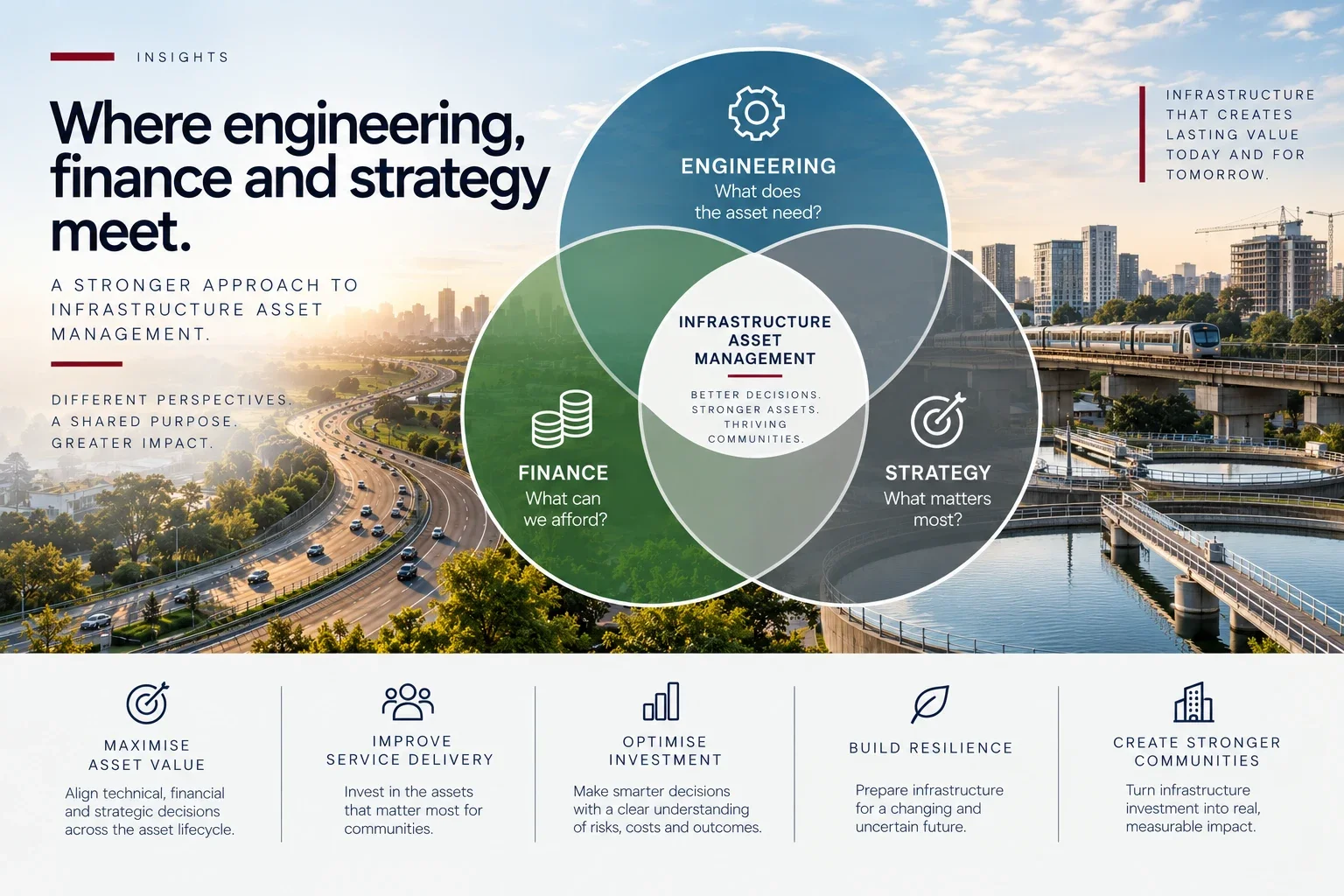
- Bring technical, operational and financial perspectives into the same conversation.
- Explain why one intervention has been prioritised over another.
- Learn from asset performance and improve future decisions.
That last point matters.
Capability isn't a finish line.
ISO 55000:2024 itself places greater emphasis on asset-management maturity and continual improvement. The question therefore isn't simply, “Have we implemented asset management?”
A better question is:
“Are we getting better at it?”
The Gap Usually Isn't Another Spreadsheet
When organisations want to improve asset management, technology is an obvious place to look.
And technology can be powerful.
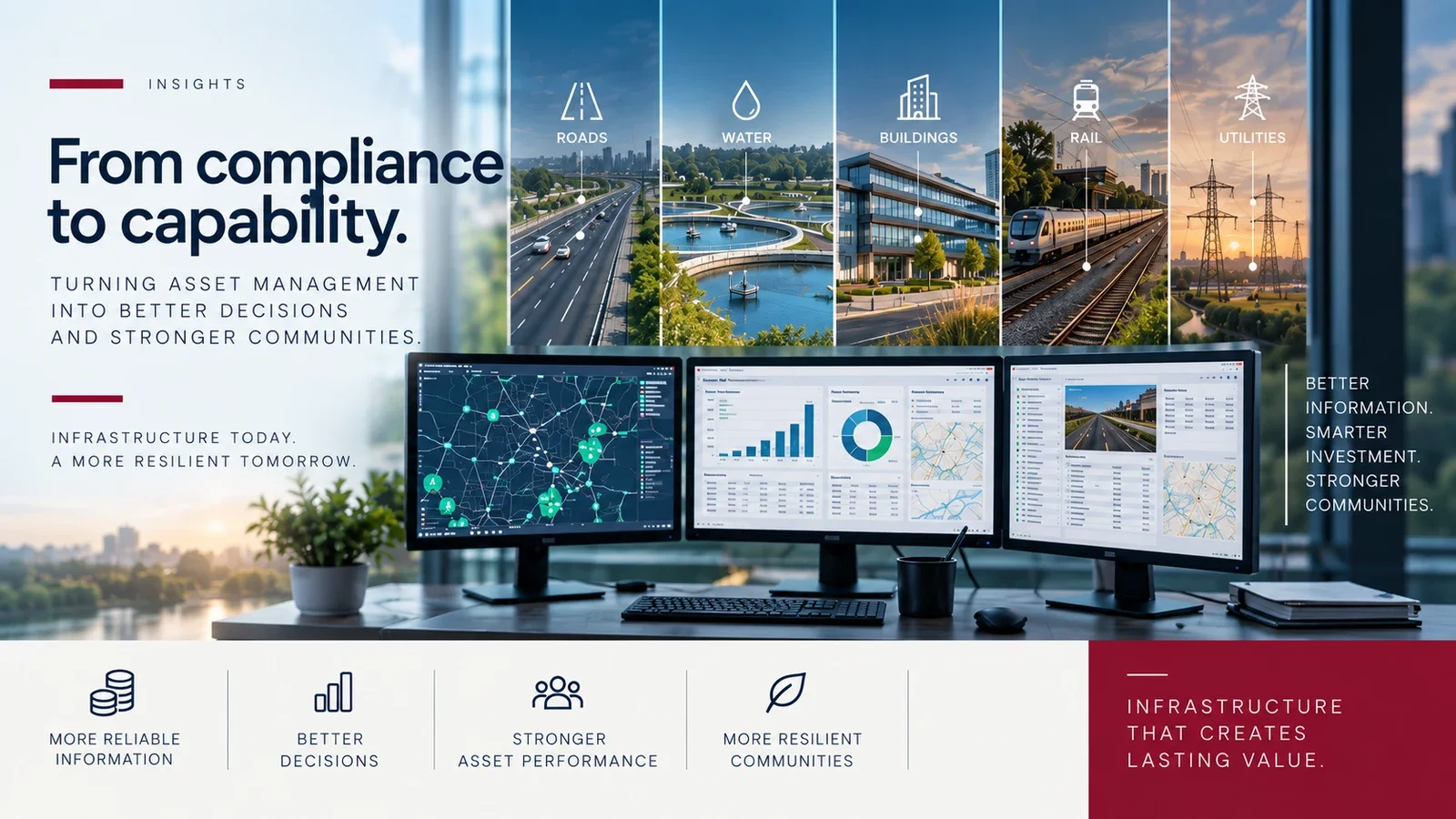
GIS, mobile inspections, integrated databases, dashboards and analytical tools can make infrastructure information easier to collect, connect and interpret.
But capability is bigger than software.
Imagine an organisation invests in an advanced asset-management platform. The system works exactly as designed, but condition assessments aren't consistently completed. Nobody is clearly responsible for updating certain records. Maintenance teams use different asset identifiers from finance. Leadership receives dashboards but doesn't use them when approving priorities.
The technology isn't necessarily the problem.
The surrounding capability is.
Digital tools can enable good asset management. They can't substitute for it.
The Missing Link Is Often Decision-Making
One of the most significant developments in ISO 55001:2024 is its explicit focus on asset-management decision-making and value.
The updated standard calls for a decision-making framework, including appropriate criteria, methods, processes and tools. The intention is to create stronger alignment between strategic objectives and the decisions made throughout an organisation.
For infrastructure owners, that principle has practical consequences.
Suppose three assets require intervention but funding exists for only one.
A mature organisation shouldn't need to rely purely on whoever makes the strongest argument in the meeting.
It should have an established way of considering questions such as:
What service does the asset support? What happens if it fails? What is its condition? What will intervention cost? What alternatives exist? What value will the intervention deliver?
Now asset management is doing something useful.
It's helping people make difficult decisions consistently.
Capability Lives Across the Organisation
Asset management isn't solely the responsibility of the engineering department.
Operations sees how assets perform day to day. Maintenance understands recurring failures. Finance sees expenditure and long-term affordability. Procurement influences lifecycle outcomes through purchasing decisions. IT supports the systems and data. Leadership determines priorities and allocates resources.
If those functions operate in isolation, information gets lost between them.
The 2024 ISO 55001 update reinforces this organisational dimension, including stronger attention to leadership, integration, data and knowledge, strategic asset management planning and lifecycle operations.
That makes asset management as much a people and decision-making challenge as a technical one.
From “Are We Compliant?” to “What Can We Do Better?”
Moving toward stronger capability doesn't necessarily require a dramatic transformation programme.
Start with the gaps that affect decisions.
Where is information unreliable? Which decisions repeatedly become difficult? Where are responsibilities unclear? Which assets generate recurring reactive maintenance? Where do technical and financial priorities disconnect?
Then improve deliberately.
An organisation may strengthen its asset register first. Another may need better condition information. Another may need clearer risk criteria, lifecycle planning or stronger links between asset plans and budgets.
Maturity develops through those improvements.
The goal isn't perfection.
It's building an organisation that becomes progressively better at turning information into decisions, decisions into action, and action into value.
Frequently Asked Questions
Q: What is ISO 55000?
A: ISO 55000:2024 provides the vocabulary, overview and principles for asset management and asset management systems. ISO 55001:2024 specifies requirements for an asset management system.
Q: What is asset management capability?
A: ISO 55000 defines capability in terms of the capacity and ability to achieve objectives. Asset management capabilities can include processes, resources, competencies and technologies used to develop and deliver asset-management plans and lifecycle activities.
Q: Does implementing ISO 55001 automatically mean an organisation has mature asset management?
A: ISO 55001 provides requirements for an asset management system, while maturity describes how capability develops and improves. An organisation can therefore continue strengthening its practices after establishing its management system.
Q: Is asset management mainly an engineering function?
A: No. Effective asset management connects multiple organisational functions. The current ISO guidance specifically identifies relevance across asset owners, management, operations, maintenance and support functions such as finance, HR, IT and procurement.
Q: Why is leadership important in asset management?
A: Leadership helps connect asset-management objectives with organisational priorities, ensures appropriate resources and responsibilities, and embeds asset management into wider organisational decision-making. ISO 55001:2024 places stronger emphasis on leadership's role in the success of the asset management system.
A Standard Can Guide the Journey. Capability Delivers the Value.
ISO 55000 can give organisations a common language. ISO 55001 can provide structure and requirements.
But infrastructure doesn't perform better because a document says it should.
Improvement happens when reliable information reaches the right people, risks influence priorities, lifecycle thinking shapes investment, teams work across organisational boundaries and lessons from performance feed the next decision.
That's when asset management stops being something an organisation has.
It becomes something the organisation does well.
Building Asset Management Capability That Works in Practice?
For infrastructure organisations, the next step isn't necessarily another policy, spreadsheet or dashboard. It may be understanding where current asset-management practices are strong, where gaps remain and which improvements would create the greatest practical value.
Talk to Infratec about strengthening the information, planning and decision-making that support effective infrastructure asset management.